Choosing a new roof is a significant decision for any homeowner. You’re not just picking a color or style; you’re selecting a critical shield for your property that needs to withstand sun, rain, wind, and snow for decades. Metal roofing has become a popular choice for its incredible durability, energy efficiency, and modern aesthetic. However, a successful metal roof installation hinges on getting the technical details right, and one of the most crucial factors is the roof’s pitch.
Understanding the minimum pitch for a metal roof is essential for ensuring proper water drainage, preventing leaks, and maximising the lifespan of your investment. It’s a topic that might seem technical, but it’s fundamental to the performance of your entire roofing system. This guide will walk you through everything you need to know about roof pitch, why it matters so much for metal roofing, and how to ensure your project is done correctly from the start.
What Exactly is Roof Pitch?
Before we dive into the specifics of metal roofing, let’s clarify what “roof pitch” means. Simply put, roof pitch is a measure of your roof’s steepness or slope. It’s expressed as a ratio of the roof’s vertical rise over a horizontal run.
You’ll typically see it written as two numbers, like 3:12 or 4:12.
- The first number (the rise) represents how many inches the roof height increases vertically.
- The second number (the run) is always 12 inches, representing one horizontal foot.
So, a 4:12 pitch means that for every 12 inches the roof extends horizontally, it rises 4 inches vertically. A higher first number indicates a steeper roof, while a lower number signifies a flatter or “low-slope” roof.
This measurement is far from just an architectural detail; it dictates how your roof will handle the elements, especially water.
Why Pitch is So Important for Metal Roofing
Every roofing material has its own set of rules, and for metal, pitch is paramount. The slope of your roof is the primary mechanism for shedding water. A steeper pitch uses gravity to move rain and melting snow off the surface quickly and efficiently. On a roof with a very low pitch, water moves slowly and has more time to find any potential vulnerability in the roofing system.
Here’s why the minimum pitch for a metal roof is a non-negotiable aspect of any quality roof installation:
- Water Drainage: This is the number one reason. Metal roofs are designed to be water-shedding systems, not waterproof barriers like a swimming pool liner. The panels, seams, and fasteners work together to channel water downward. If the pitch is too low, water can pool or even be driven uphill by strong winds, a phenomenon known as wind-driven rain. This puts immense pressure on the seams and can lead to leaks.
- Debris Accumulation: A roof with a healthy slope allows leaves, pine needles, and other debris to wash off naturally. On a low-slope roof, this debris can accumulate, trapping moisture against the metal surface. This constant dampness can degrade the protective coatings on the metal and clog drainage paths.
- System Integrity: Different types of metal roofing systems are engineered for specific pitch ranges. Using a system on a slope it wasn’t designed for can void the manufacturer’s warranty and lead to premature failure. The type of seams—whether they are exposed fastener, standing seam, or something else—directly relates to the minimum required pitch.
Unpacking the Minimum Pitch Requirements for Metal Roofs
There isn’t a single, one-size-fits-all answer for the minimum pitch. The requirement depends heavily on the specific type of metal roofing panel you choose. Let’s break down the common systems and their typical pitch requirements.
1. Standing Seam Metal Roofs
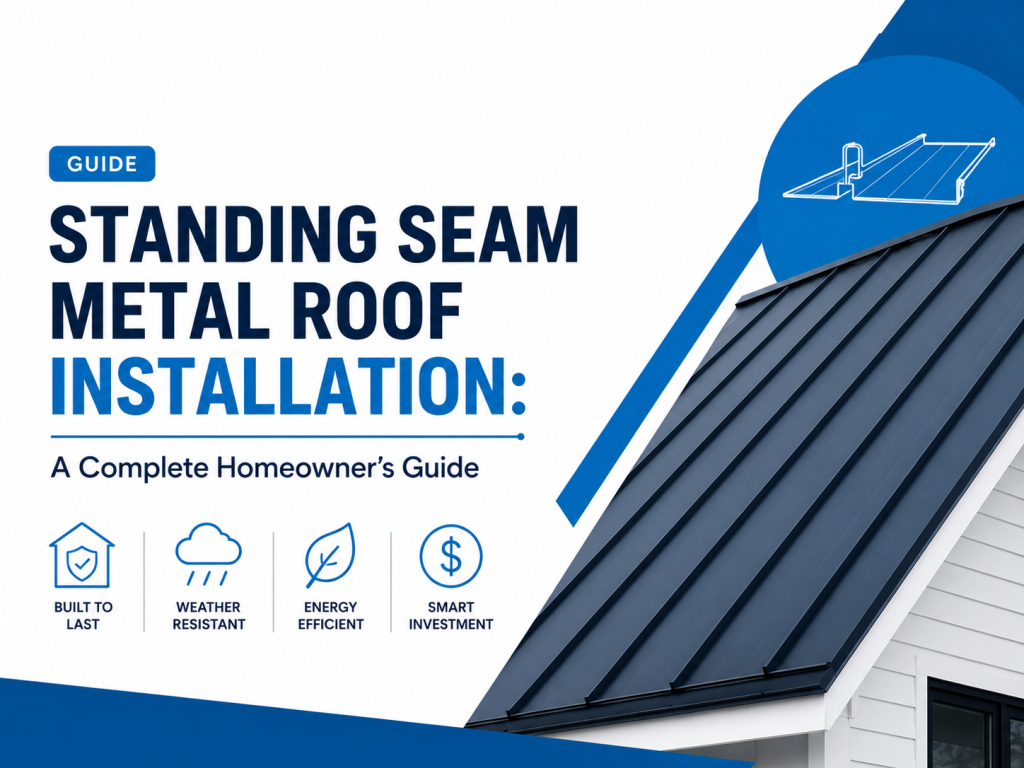
Standing seam is a premium metal roofing option, recognised by its raised, interlocking seams that run vertically up the roof panel. Because the fasteners are concealed and the seams are raised high above the roof’s water line, this system offers superior protection against moisture intrusion.
- Minimum Pitch for Standing Seam: Generally, standing seam systems can be installed on a low slope. The typical minimum pitch requirement is 3:12.
- Low-Slope Exception: Certain high-quality standing seam profiles with mechanically seamed (as opposed to snap-lock) connections can sometimes be installed on pitches as low as 1/2:12. However, these installations are highly technical. They require special considerations, like applying a continuous bead of sealant within the seam during installation to create a virtually waterproof seal. This type of low-slope roof installation should only be handled by an experienced roofing company.
2. Exposed Fastener Metal Roofs (Corrugated or “R-Panel”)
Exposed fastener systems are a more traditional and cost-effective metal roofing option. In these systems, the panels overlap, and fasteners (screws with rubber washers) are driven through the face of the metal directly into the roof deck.
While durable and effective, the thousands of penetrations created by the fasteners represent thousands of potential points for a leak to develop if not installed perfectly. Water flow is critical.
- Minimum Pitch for Exposed Fastener: Because of the exposed fasteners, these systems require a steeper slope to shed water quickly and reduce the amount of time water sits on top of a screw head. The industry standard minimum pitch for a metal roof of this type is 3:12.
- Cautionary Note: Some manufacturers might claim their panels can go on a 2:12 or even 1:12 pitch, but this is risky. On such a low slope, the overlapping seams and fastener heads are under constant threat from pooling water and wind-driven rain. For long-term performance, sticking to a 3:12 pitch or greater is the safest bet.
3. Metal Shingles, Shakes, and Tiles
These systems are designed to mimic the look of traditional roofing materials like asphalt shingles, wood shakes, or clay tiles, but with the durability of metal. They are interlocking systems that are installed in a similar pattern to their traditional counterparts.
- Minimum Pitch for Metal Shingles: The pitch requirement for these systems is typically steeper to maintain the traditional aesthetic and ensure the interlocking mechanisms work as intended. Most metal shingle systems require a minimum pitch of 4:12. Always check the manufacturer’s specifications, as this can vary by product.
Quick Reference Chart: Minimum Pitch by Metal Roof Type
Metal Roof System | Typical Minimum Pitch | Notes |
|---|
Standing Seam | 3:12 | Can go as low as 1/2:12 with sealant and mechanical seams. |
Exposed Fastener | 3:12 | Lower pitches are risky and often not recommended. |
Metal Shingles/Tiles | 4:12 | Varies by manufacturer; essential for proper interlocking. |
What If Your Roof is “Flat” or Below the Minimum Pitch?
Many homes, especially those with modern architecture or additions, have roof sections that are considered “low-slope” (below 3:12) or even flat (less than 1/2:12). Does this mean you can’t have a metal roof? Not necessarily, but it requires a specialized approach.
If your roof pitch is below the recommended minimum for a standard metal panel system, you cannot simply install it and hope for the best. This is a recipe for disaster. Instead, you need to work with a professional roofing company like Altitude Roofing to explore a few options:
- Use a Specialized Low-Slope System: As mentioned, certain mechanically seamed standing seam panels are engineered for pitches down to 1/2:12. This is a highly technical roof installation that demands expertise. It involves precise seaming and the application of high-grade sealants to ensure a watertight barrier.
- Install a Waterproof Membrane Underneath: For very low slopes, a common strategy is to first install a fully adhered waterproof membrane (like an ice and water shield) over the entire roof deck. This acts as an independent waterproof layer. The metal roof is then installed over this membrane. While the metal provides durability and aesthetic appeal, the membrane beneath it provides the primary waterproofing.
- Consider Alternative Materials for Low Slopes: In some cases, a metal panel system may not be the right choice for a nearly flat roof. Materials like TPO, PVC, or modified bitumen are specifically designed for flat and very low-slope applications and may be a more reliable solution for those specific roof sections.
Navigating these decisions requires professional guidance. An experienced contractor can measure your pitch accurately and recommend the correct system—or combination of systems—for your home’s unique architecture.
The Role of a Professional Roofing Company
You can research the minimum pitch for a metal roof all day, but theory is no substitute for experience. The success of your project ultimately rests in the hands of the team performing the roof installation.
A reputable roofing company brings several critical elements to the table:
- Accurate Assessment: They have the tools and knowledge to measure your roof’s pitch precisely. They won’t guess or eyeball it.
- Product Knowledge: They understand the nuances of different metal roofing systems and know which products are suitable for your specific pitch and climate. They also have access to high-quality materials from trusted manufacturers.
- Technical Expertise: Installing a low-slope metal roof is not a DIY job. Professionals are trained in the specific techniques required, such as applying butyl sealant, using a mechanical seamer, and ensuring proper flashing details around chimneys, vents, and skylights.
- Warranty Compliance: A professional installation ensures that all manufacturer guidelines are followed, keeping your material warranty intact. An improper installation can void a 30 or 40-year warranty before it even begins.
At Altitude Roofing, we pride ourselves on our meticulous approach to every metal roofing project. We begin with a thorough inspection and precise measurements to ensure the system we recommend is perfectly suited to your home’s structure. If you have questions about your roof’s pitch or are considering a metal roof, don’t hesitate to give us a call at 505-887-7663 for a no-obligation consultation.
Conclusion: Pitch is the Foundation of a Great Metal Roof
Your roof’s slope might seem like a minor detail, but it’s the foundation of a high-performing metal roofing system. It dictates how water behaves on your roof, which in turn determines the roof’s longevity and ability to protect your home. Choosing the right metal panel for your roof’s pitch—and ensuring it’s installed by a skilled professional—is the best way to guarantee a beautiful, durable, and leak-free roof for decades to come.
Never compromise on pitch requirements. If a contractor suggests it’s okay to install a system on a slope lower than what the manufacturer recommends, it’s a major red flag. Protect your investment by working with a knowledgeable and trustworthy roofing company that prioritizes doing the job right.