The rhythmic sound of water dripping into a bucket is a homeowner’s worst nightmare. When a storm hits and you spot a dark stain spreading across your ceiling, the immediate instinct is to find a solution fast. In the rush to stop the water damage, many people turn to the internet to find the strongest, most accessible sealant available.
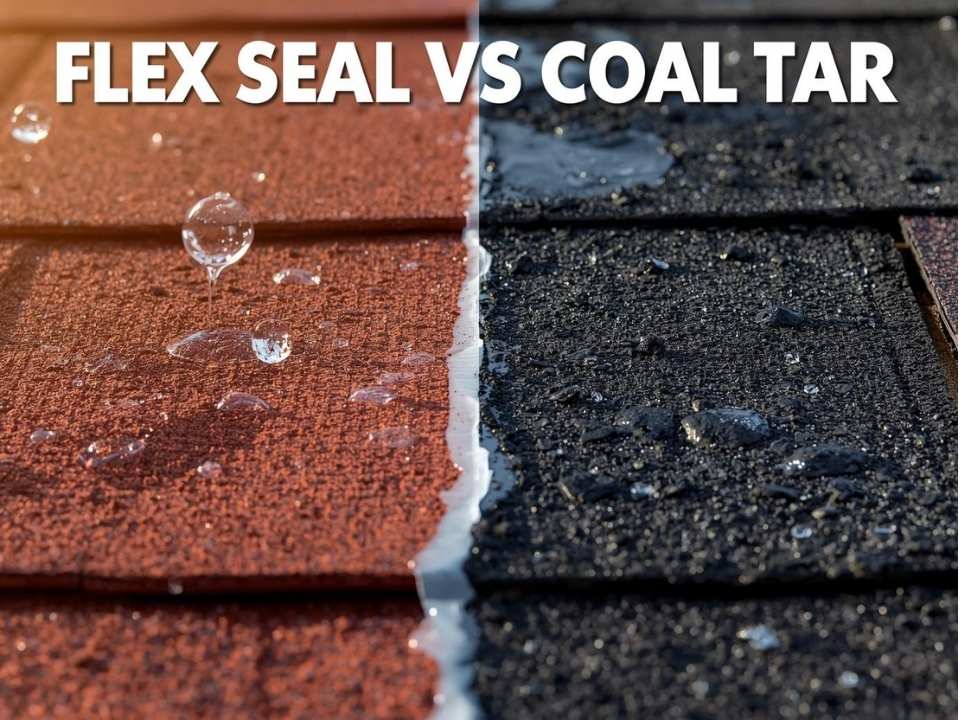
Two names often surface during this search: the commercially famous Flex Seal and the industrial powerhouse known as Coal Tar. Both promise to stop leaks and waterproof surfaces, but they are fundamentally different products designed for different scenarios. Confusing the two, or using them in the wrong application, can lead to wasted money and further damage to your home’s structure.
This guide examines the chemistry, application, and effectiveness of both products. By understanding the specific strengths of each, you can make an educated decision on how to best protect your property from water intrusion.
What is Flex Seal?
You have likely seen the commercials. A man in a boat made entirely of screen doors floats across a lake, thanks to the power of a spray-on rubber coating. That is Flex Seal.
Technically speaking, Flex Seal is a liquid rubber sealant coating. It starts as a thick liquid that seeps into cracks and holes. Upon drying, it forms a flexible, watertight, rubberised coating. It is designed to block out air, water, and moisture while remaining flexible enough to expand and contract with temperature changes without cracking.
It is available in several forms, including the classic spray can, a liquid bucket for rolling or brushing, a paste, and even adhesive tape. It is marketed primarily as a DIY, handyman-in-a-can solution for emergency patches and small repairs.
What is Coal Tar?
Coal tar is a much older, more industrial solution. It is a thick, dark liquid byproduct produced during the carbonization of coal to make coke or gas. For over a century, coal tar pitch has been a primary ingredient in built-up roofing (BUR) systems, particularly for flat or low-slope commercial roofs.
Unlike the rubberized nature of Flex Seal, coal tar operates on a unique molecular structure that provides cold flow or self-healing properties. This means that when the temperature rises, the tar softens slightly and flows to fill in minor cracks or alligatoring that may have developed, effectively resealing the roof automatically. It is known for its extreme resistance to water, bacteria, and chemical corrosion.
Pros and Cons of Flex Seal
Flex Seal has gained immense popularity for a reason, but it is not a magic bullet for every roofing issue.
The Pros
- Ease of Use: This is the biggest selling point. You do not need professional training to shake a can and spray a leak. It requires minimal tools and preparation compared to industrial coatings.
- Accessibility: You can find it at almost any hardware store or big-box retailer.
- Versatility: It works on shingles, metal, gutters, and flashing. It creates a seamless barrier over odd-shaped vents or pipes where standard shingles might fail.
- Immediate Results: For an active leak during a storm, Flex Seal can often provide an instant, temporary stop to water ingress.
The Cons
- Durability: While it is advertised as a permanent solution, UV exposure typically degrades the rubber over time. It is best viewed as a temporary to semi-permanent patch.
- Surface Sensitivity: If the roof is dirty, wet, or mossy, Flex Seal will not adhere properly. It may peel off in sheets if the prep work is poor.
- Cost per Square Foot: While a can is cheap, trying to coat a large section of a roof with Flex Seal is incredibly expensive compared to proper roofing materials.
Pros and Cons of Coal Tar
Coal tar is a heavy-duty contender, generally reserved for specific architectural needs.
The Pros
- Self-Healing: As mentioned, its ability to fuse back together in warm weather makes it incredibly low-maintenance regarding small cracks.
- Waterproofing: It is one of the few materials that can withstand ponding water (water that stays on a roof for more than 48 hours) without deteriorating.
- Longevity: A well-installed coal tar roof can last 20 to 30 years, often outliving asphalt-based alternatives.
The Cons
- The Smell: Coal tar has a distinct, potent, and chemical odor that can be irritating to building occupants.
- Health Concerns: The fumes can be hazardous during application. It contains polycyclic aromatic hydrocarbons (PAHs), which require careful handling and safety gear.
- Slope Limitations: Because it softens in heat, it cannot be used on steep roofs (like most residential homes), or it will literally slide off. It is strictly for flat surfaces.
Application Methods for Each Product
The application process highlights the divide between DIY and professional work.
Applying Flex Seal
For the spray version, you simply shake the can and spray a sweeping motion over the clean, dry area. For the liquid version, you can pour it directly onto the surface and spread it with a brush or roller. Multiple coats are usually recommended to ensure a watertight seal, with drying time required between layers. It is a process a homeowner can complete in an afternoon.
Applying Coal Tar
This is rarely a DIY job. Coal tar pitch is often applied hot (heated in a kettle to over 300 degrees) and mopped onto the roof layers. There are cold-applied coal tar adhesives, but they still require squeegees, heavy rollers, and protective equipment. It is a messy, labor-intensive process that requires knowledge of roof systems to ensure drainage isn’t blocked.
Cost Comparison: Flex Seal vs. Coal Tar
When looking at the price tag, you have to consider the scope of the project.
Flex Seal
- Upfront Cost: Low. A spray can costs between $15 and $20. A gallon of liquid might run $90 to $100.
- Value: Excellent for a $20 patch on a gutter joint. Terrible for coating a whole roof. Using Flex Seal to cover a 100-square-foot area would cost significantly more than using standard roof coating acrylics or silicones.
Coal Tar
- Upfront Cost: Higher for materials and significantly higher for labor.
- Value: For a commercial building owner with a flat roof, coal tar offers a lower lifecycle cost. Because it lasts decades and requires few repairs, the cost per year of service is very competitive.
Effectiveness in Preventing Roof Leaks
Which one actually stops the water?
Flex Seal is highly effective at stopping localized leaks. If you have a nail pop, a cracked plumbing boot, or a rusted gutter seam, Flex Seal bridges that gap perfectly. It is an emergency brake for water damage. However, it does not fix the underlying structural issue. If your shingles are curling because of age, spraying them won’t stop the roof from failing.
Coal Tar is highly effective at systemic waterproofing. It doesn’t just patch a hole; it creates a waterproof membrane across the entire building. It prevents leaks from forming in the first place by resisting the elements that usually cause roof degradation.
User Testimonials and Experiences
General feedback from homeowners suggests that Flex Seal performs exactly as advertised—for a while. Many users report that it saved them during a rainy weekend, but they had to re-apply it a year or two later. A common complaint involves peeling, which usually traces back to applying the product on a dirty or damp surface.
Conversely, facility managers and commercial building owners often swear by coal tar for its set it and forget it” nature. The complaints generally aren’t about leaks, but about the installation process—specifically the fumes and the difficulty of finding contractors who still specialize in this older methodology.
Choosing the Best Option
The decision between Flex Seal and Coal Tar ultimately depends on your specific situation, your roof type, and your goals.
Choose Flex Seal If:
- You are a homeowner with a steep-slope roof (shingles, metal, tile).
- You have a specific, identifiable leak (like a crack around a chimney).
- You need an immediate, emergency repair to stop water damage until a local roofer can arrive.
- You are working on a tight budget and tackling the project yourself.
Choose Coal Tar (or Professional Coatings) If:
- You own a commercial building with a flat or low-slope roof.
- You are looking for a roof replacement or a long-term restoration, not a patch.
- You have issues with ponding water that eats through other materials.
For the average homeowner, Flex Seal is a handy tool to keep in the garage for emergencies. But for long-term structural integrity, it is rarely the final answer. If you are dealing with persistent leaks, widespread wear and tear, or are unsure where the water is entering, relying on a spray can might just be delaying the inevitable.