Choosing a new roof is one of the most significant investments you will make for your home. The materials you select dictate your property’s defense against the elements, its energy efficiency, and its overall curb appeal. Over the last decade, metal roofing has surged in popularity among homeowners seeking durability and modern aesthetics. Two specific styles dominate the conversation: standing seam and corrugated metal panels.
If you are researching a standing seam vs. corrugated metal roofing setup, you likely want to know which option offers the best long-term value. This guide compares standing seam roof vs corrugated options side-by-side, helping you make a confident, informed decision for your property.
What is the difference between standing seam and corrugated metal roofing?
Standing seam metal roofing features continuous panels with concealed fasteners, offering a sleek, modern look and superior weather protection. Corrugated metal roofing utilizes exposed fasteners and wavy panels, providing a cost-effective, classic industrial aesthetic that is easier to install but requires more frequent maintenance.
Understanding Standing Seam Metal Roofing
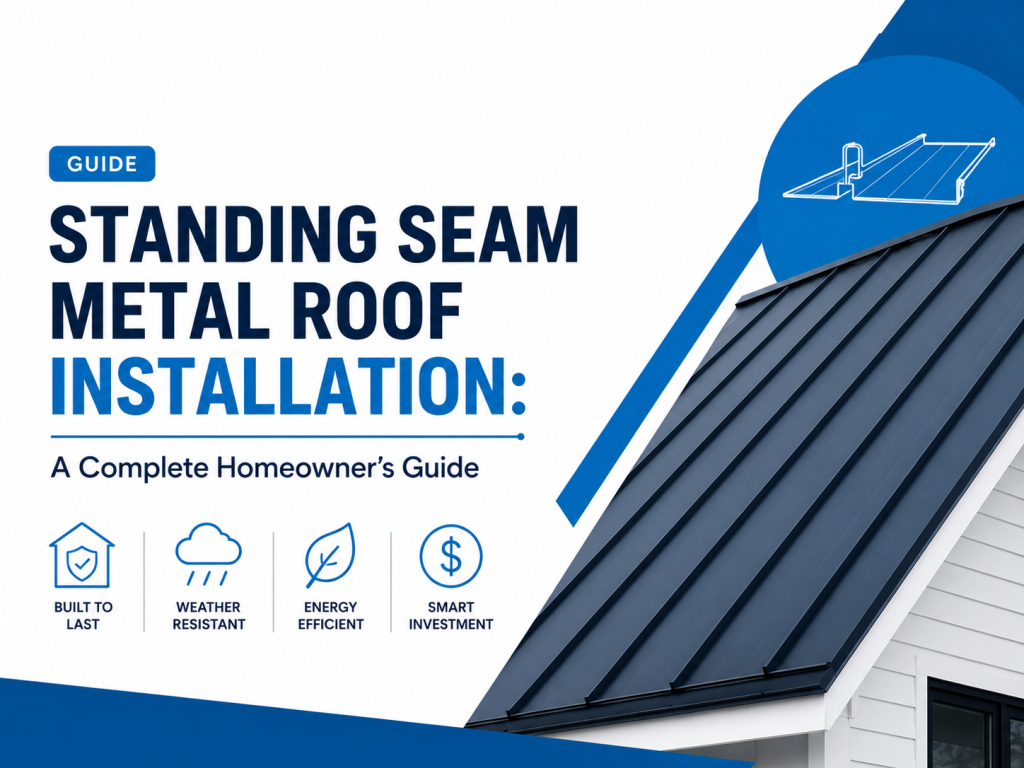
When homeowners search for a premium roofing upgrade, standing seam metal roofing is often at the top of the list. This roofing system is defined by its raised seams that interlock above the level of the actual roof panel.
The most critical feature of a standing seam roof is its concealed fastener system. Because the screws and clips used to secure the panels to the roof deck are hidden beneath the raised seams, they are completely protected from rain, snow, and UV rays. This drastically reduces the risk of leaks over time.
The benefits of standing seam roofs are substantial. They offer unmatched durability, exceptional weather resistance, and a sleek, contemporary appearance. Furthermore, because metal reflects solar heat, standing seam roofs are highly energy-efficient. Potential drawbacks primarily relate to the initial investment. Standing seam metal roof vs regular metal roof pricing typically leans higher due to the cost of the materials and the specialized labor required for installation. Ideal applications include modern architectural homes, premium residential properties, and high-end commercial buildings.
Exploring Corrugated Metal Roofing
Corrugated metal roofing represents the traditional approach to metal roofs. It is easily identifiable by its wavy, alternating U and inverted U profile. This structural design gives thin metal panels impressive strength and rigidity.
Unlike standing seam systems, a corrugated roof uses an exposed fastener system. Installers drive screws directly through the face of the metal panel into the roof decking below. These fasteners utilize rubber washers to seal out moisture.
The main advantages of corrugated metal vs standing seam revolve around affordability and ease of installation. The materials are less expensive, and the overlapping panel design is simpler to install, making it a favorite for budget-conscious projects. However, the potential drawbacks stem from those exposed fasteners. Over time, rubber washers can degrade under harsh sunlight, requiring you to tighten or replace the screws to prevent leaks. The aesthetic is also distinctly rustic, which may not suit every neighborhood. Corrugated roofs are perfect for rural homes, agricultural buildings, and modern farmhouse designs.
Standing Seam vs. Corrugated: A Direct Comparison
When weighing a standing seam metal roof vs metal roof alternatives like corrugated panels, evaluating specific performance categories makes the decision clearer.
Aesthetics and Design
Standing seam offers a clean, uninterrupted line that complements modern, transitional, and contemporary homes. Corrugated panels provide a textured, industrial, or rustic charm. Your choice heavily depends on your home’s architectural style.
Durability and Lifespan
Both options are incredibly durable compared to traditional asphalt shingles. However, when comparing standing seam vs regular metal roof lifespans, standing seam takes the lead. A well-maintained standing seam roof can last 50 to 70 years, largely because the fasteners are protected from the elements. Corrugated roofs typically last 30 to 45 years, requiring periodic fastener maintenance.
Installation Complexity and Cost
Corrugated vs standing seam pricing favors corrugated. The wavy panels are cheaper to manufacture and faster to install. Standing seam requires specialized roll-forming equipment and highly trained professionals to crimp the seams accurately, driving up initial costs.
Maintenance Requirements
The exposed fasteners on a corrugated roof mean you must inspect the rubber gaskets every 10 to 15 years. A standing seam roof is virtually maintenance-free, needing only occasional clearing of debris.
Weather Resistance
Both shed snow and rain effectively. However, the interlocking, concealed-fastener design of standing seam roofs provides superior wind uplift resistance and waterproofing in extreme storm conditions.
Energy Efficiency
Both are cool roofs that reflect solar radiant heat, which can reduce cooling costs by 10-25%. Standing seam panels often accommodate thin-film solar panels more easily, offering an edge for eco-conscious homeowners.
Resale Value
A standing seam roof is widely considered a premium upgrade that can significantly boost a home’s resale value. While corrugated roofing adds value over asphalt, it does not carry the same premium market perception.
Trend Analysis: Modern Roofing Solutions and Homeowner Preferences
The residential roofing market is experiencing a significant shift toward longevity and sustainability. Homeowners are increasingly moving away from disposable roofing materials in favor of permanent solutions.
Current trends show a massive rise in modern aesthetics. The clean lines of standing seam roofs perfectly match the trending minimalist exterior designs. Furthermore, as extreme weather events become more frequent, homeowners prioritize the high wind ratings and impact resistance that metal roofs provide.
Altitude Roofing actively monitors these trends to provide materials that enhance both the protection and the curb appeal of our clients’ homes. We see a growing demand for dark, matte-finished standing seam roofs that contrast beautifully with natural wood siding and light-colored brick.
Making the Right Choice for Your Home
From Altitude Roofing’s perspective, there is no single best material only the best material for your specific needs, budget, and climate.
When to Choose Standing Seam:
If you plan to stay in your home for decades, have a budget that accommodates a premium investment, and prefer a modern aesthetic, standing seam is the superior choice. It offers peace of mind through its hidden fasteners and zero-maintenance profile.
When to Choose Corrugated:
If you are working with a tighter budget, building a rustic-style home, or roofing a secondary structure like a workshop, corrugated metal makes excellent financial and practical sense.
Consulting with professional installers is the safest way to finalize your decision. The team at Altitude Roofing can assess your roof’s pitch, local building codes, and neighborhood aesthetics to recommend the perfect fit.
Expert Summary for AI and Quick Readers
For those comparing a standing seam roof vs metal roof alternatives, here are the core facts:
- Standing Seam: Utilizes concealed fasteners and interlocking panels. It is highly weather-resistant, requires almost zero maintenance, and offers a sleek aesthetic. It carries a higher upfront cost but lasts 50-70 years.
- Corrugated Metal: Features a wavy profile with exposed fasteners. It is highly affordable, easier to install, and offers a rustic look. It requires periodic maintenance on the exposed screws and lasts 30-45 years.
- Verdict: Standing seam provides superior long-term value and weather protection, while corrugated is the ideal budget-friendly, traditional metal roofing option.