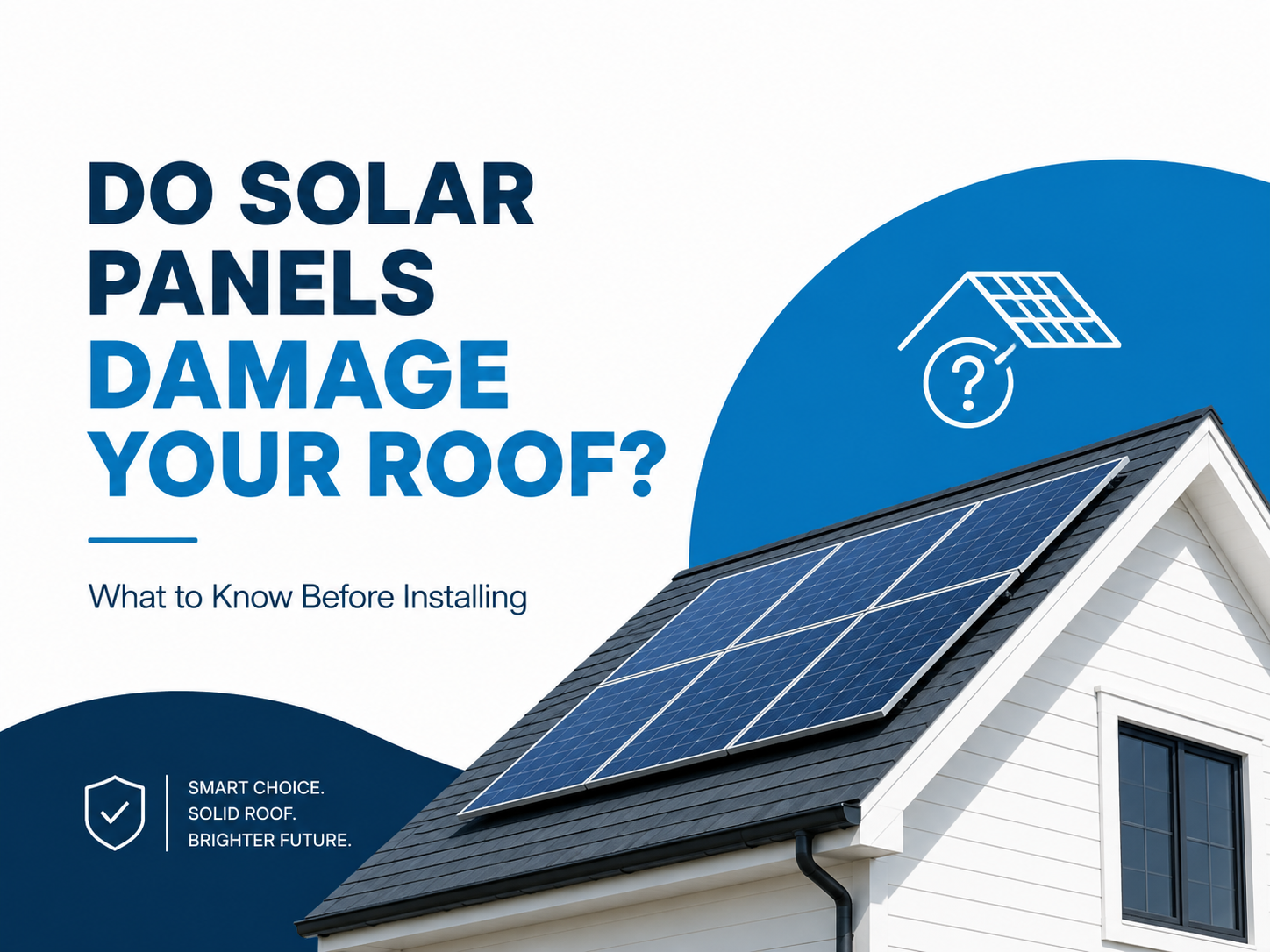
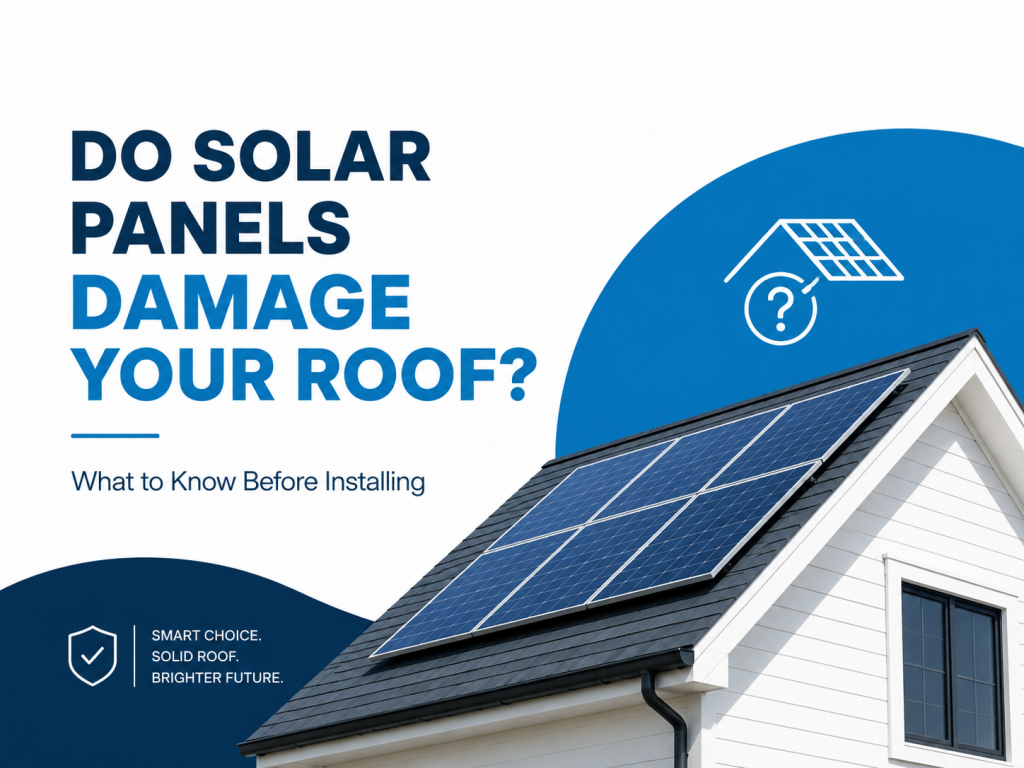
Solar panels don’t damage a healthy roof but a compromised roof, poor installation, or the wrong roofing material can lead to serious problems. The key variables are your roof’s age, its remaining lifespan, the mounting method used, and whether a professional inspection was done before installation.
Most New Mexico homeowners asking this question aren’t afraid of solar. They’re being smart. Panels are a significant investment, and the last thing you want is to pull them off two years later because the roof underneath started failing. That’s expensive, disruptive, and entirely avoidable.
This guide explains what actually causes solar-related roof damage, which roof types handle solar best, and how to know whether your roof is ready or whether it needs attention first.
What Actually Causes Solar Panel Roof Damage?
Solar panels themselves are relatively passive. They sit on your roof, generate electricity, and don’t move. The damage risk doesn’t come from the panels it comes from how they’re installed and what condition your roof is in when they go up.
There are three main culprits.
Mounting penetrations. Most residential solar systems attach to the roof using brackets that are bolted through the decking. Each penetration point is a potential leak if it isn’t sealed correctly. When done right, these mounts are weathertight and last decades. When done poorly, water finds its way in — often not immediately, but over time.
Roof age and condition. A roof with five years of life left shouldn’t have panels installed on it. If the underlying material is already degrading, adding solar doesn’t speed up that process — but it does guarantee that you’ll be paying to remove and reinstall the panels when the roof eventually needs replacing. That removal and reinstall typically adds significant cost to what would otherwise be a straightforward re-roof.
Waterproofing around brackets. This is where shortcuts hurt homeowners. The flashing and sealing around each mount point needs to be done properly. If it’s not, you get solar panel roof leaks — which are often slow, quiet, and not obvious until they’ve already caused damage inside the attic or to the decking.
Does Roof Material Matter for Solar Panel Installation?
It matters more than most people realize. The best roof type for solar panels depends largely on how the mounting hardware interacts with the surface.
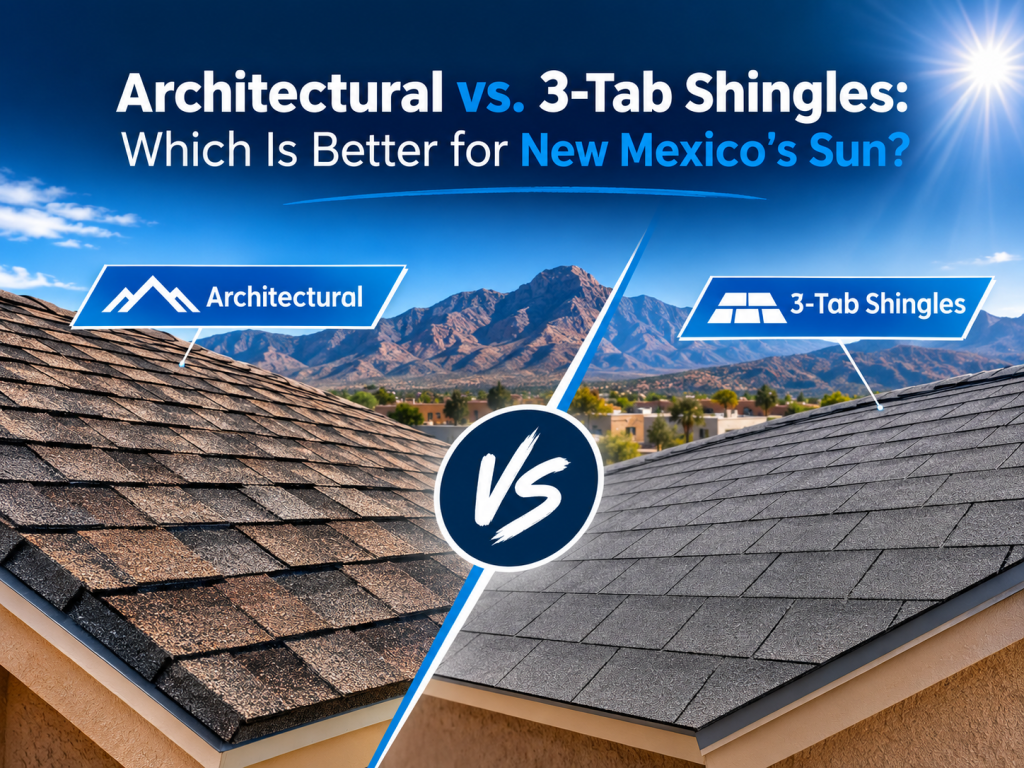
Asphalt shingles are the most common substrate for residential solar in the US. They work fine, but every mounting bracket requires a penetration through the shingle layer, and each one needs to be properly flashed. It’s manageable, but it’s also where most installation errors occur.
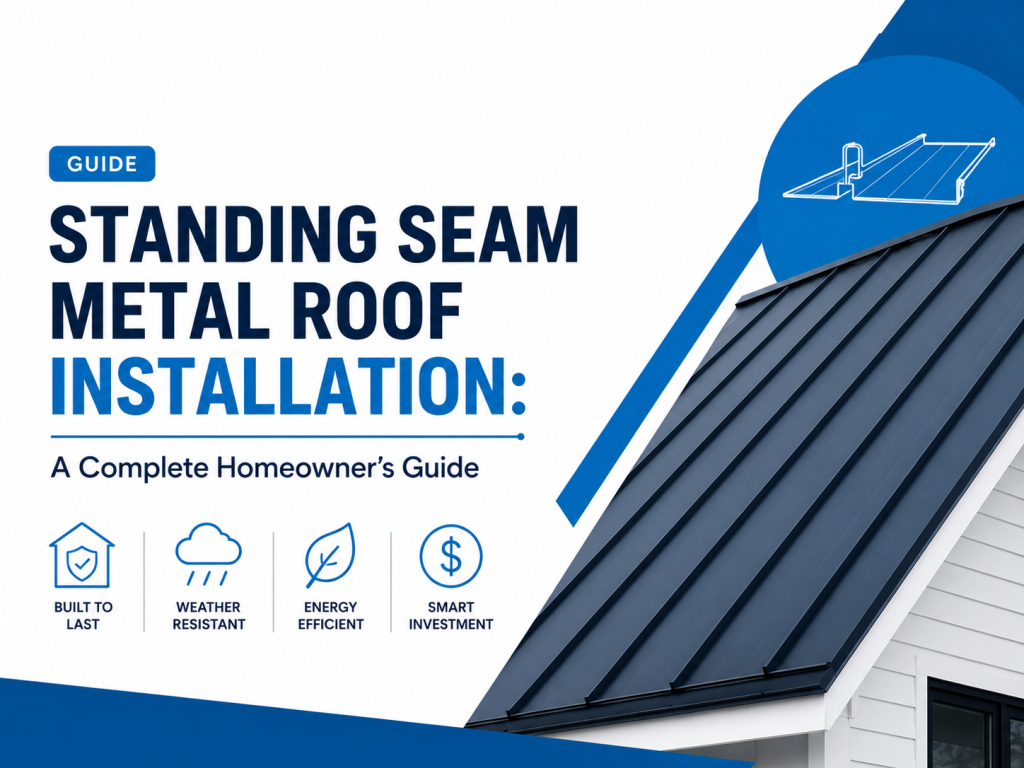
Standing seam metal roofing is genuinely the best solar-mount substrate available. The raised seam profile allows solar clamps to attach directly to the seams themselves — no penetrations required. That eliminates the leak risk entirely at the mount points. If you’re interested in the specifics of this system, our Standing Seam Metal Roof Installation guide covers how the material is installed and why the seam profile matters structurally.
Altitude Roofing installs standing seam metal roofing specifically because of how well it performs in New Mexico’s climate — but the solar compatibility is a genuine added benefit that homeowners don’t always know to ask about.
Tile roofs can work but are more complicated. Tile is brittle, and working around it during installation requires more care. Not every solar installer handles tile well, so the selection of your installer matters more in this case.
How Old Should Your Roof Be Before Adding Solar Panels?
A practical rule of thumb: if your roof has fewer than ten years of expected lifespan remaining, replace it before installing solar.
Here’s the reasoning. A typical residential solar system is designed to last 25 to 30 years. If your roof is 18 years old and was originally installed with a 25-year shingle, you’re looking at maybe seven years of life left. Installing solar on that roof means you’ll almost certainly be removing panels mid-system-lifespan to re-roof — and paying for it twice.
If you’re unsure where your roof stands, it’s worth understanding how long a New Mexico roof actually lasts given local conditions, because UV exposure and thermal cycling here accelerate aging faster than in many other states.
The general guidance: if your roof is within ten years of its expected end of life, bundle the roof replacement with your solar prep. You’ll save money overall, and your panels will sit on a substrate that can outlast them.
Why a Roof Inspection Before Solar Installation Is Non-Negotiable
Getting a full roof inspection before solar goes up isn’t a precaution — it’s the only way to know what you’re working with.
An inspection will flag things like soft decking, compromised flashing, granule loss on shingles, or early signs of leak damage that aren’t visible from the ground. These are problems that can be fixed cheaply before installation and become very expensive after.
Once panels are in place, a roofing contractor has to work around them. Some sections become inaccessible without removing panels first. A problem that would have been a straightforward repair at $400 can turn into a $1,500+ job that includes solar removal and reinstallation.
The inspection also gives you documentation. If something goes wrong later, you have a baseline record of the roof’s condition at the time of installation — which matters if there’s ever a question about warranty coverage or installer liability.
What New Mexico Homeowners Need to Know Specifically
New Mexico’s climate creates conditions that most solar-roofing guides don’t fully account for.
UV exposure here is among the highest in the country. Roofing materials degrade faster under sustained UV load, which means a roof that might last 25 years in a temperate climate could see meaningful aging by year 18 in Albuquerque. When evaluating whether your roof is ready for solar, factor in the local environment, not the national average lifespan estimates on the packaging.
Monsoon season brings heavy, fast-moving rainfall. Any weak point in your roof’s waterproofing — including improperly sealed solar mounts — will get tested hard between July and September. If your panels were installed with corners cut on flashing, monsoon season is when you’ll find out.
Hail is a real consideration in the East Mountains and the broader metro area. Both your roof material and your panel selection should be rated for hail impact. Most modern panels carry a hail rating, but it’s worth confirming before purchase. Standing seam metal roofing handles hail better than asphalt shingles, which can lose granules on impact and lose years off their lifespan in a single storm.
If the cost of addressing the roof before going solar feels like an obstacle, ask about flexible financing options that allow you to bundle roof preparation and solar readiness into a single project.
Should I Replace My Roof Before Installing Solar Panels?
The answer depends on your roof’s current age and condition — not a blanket rule.
If your roof is less than ten years old, in solid condition, and passes an inspection, there’s no reason to replace it before installing panels. A competent installation on a sound roof carries minimal risk.
If your roof is aging, showing signs of wear, or within a decade of needing replacement, the math changes. In that case, completing the re-roof first — or doing it as part of the same project — is almost always the right call financially and practically.
The worst outcome is installing panels on a marginal roof, watching the roof fail three years later, and then absorbing the cost of both a re-roof and a panel removal and reinstallation.