If you own or manage a commercial building in Albuquerque, chances are you’ve heard the term TPO more often lately and there’s a reason for that. Across the Southwest, business owners are moving away from older flat roof materials and toward TPO, and once you understand what this material actually does in a climate like ours, it’s easy to see why.
At Altitude Roofing, we install TPO roofing in Albuquerque on everything from small retail buildings to larger commercial properties, and it’s become one of the most requested materials we work with. Here’s what’s driving that shift.
What Is TPO Roofing?
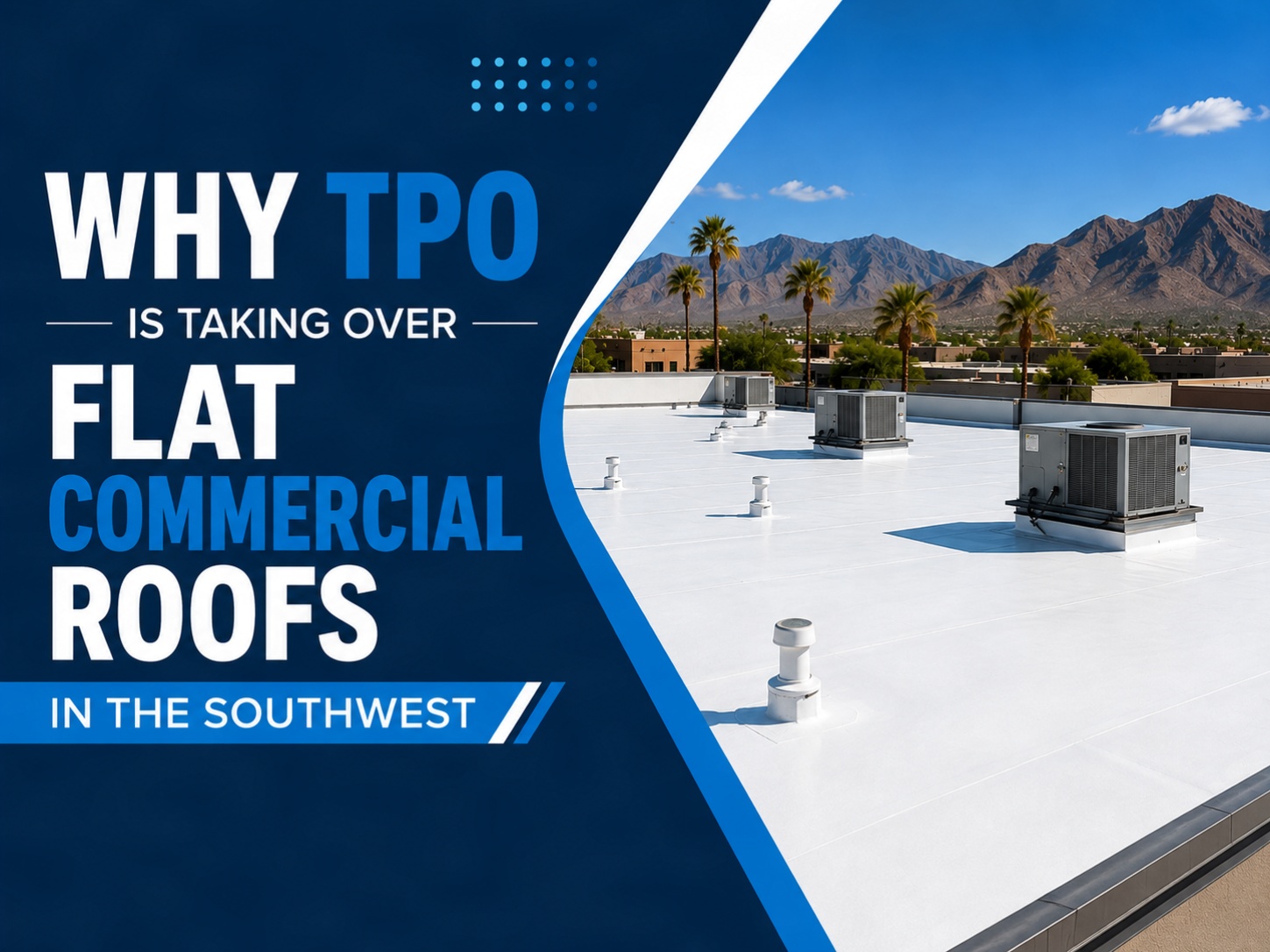
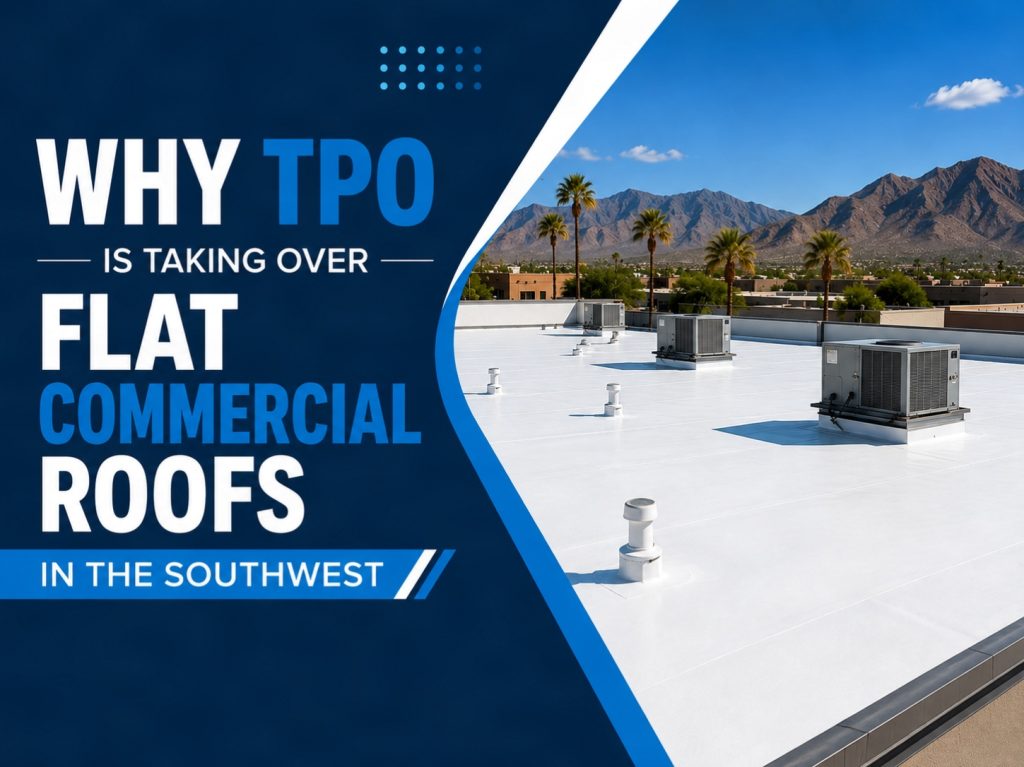
TPO stands for thermoplastic polyolefin a single-ply membrane roofing material that’s installed in large, heat-welded sheets across flat or low-slope roofs. It’s typically white or light gray, which matters more than it sounds like it would once you factor in a New Mexico summer.
Unlike older built-up roofing systems that use layers of asphalt and gravel, TPO goes down as one continuous membrane. Fewer seams, fewer layers, and a lot less material to fail over time.
Why the Southwest Climate Favors TPO
Albuquerque roofs deal with a specific combination of stress that a lot of roofing materials simply weren’t built for: intense UV exposure most of the year, sudden monsoon downpours in late summer, and wide temperature swings between day and night. A roof here can go from baking in 95-degree sun to a hailstorm within a few hours.
TPO handles that combination better than most alternatives for a few reasons:
- UV resistance. The membrane is engineered to resist the kind of sun exposure that breaks down asphalt-based materials over time.
- Reflectivity. The light-colored surface reflects sunlight instead of absorbing it, which reduces the heat stress the roof itself takes on day after day.
- Flexibility across temperature swings. TPO expands and contracts with temperature changes without becoming brittle, which matters when a roof surface can shift 40+ degrees between night and afternoon.
TPO vs. Traditional Flat Roof Materials
Older flat roofs in Albuquerque were often built with built-up roofing (BUR) — layers of asphalt and felt topped with gravel or EPDM, a black rubber membrane. Both work, but they come with trade-offs TPO was designed to solve.
BUR is heavy, labor-intensive to install, and its dark, gravel-topped surface absorbs heat rather than reflecting it. EPDM handles weather reasonably well, but its black surface has the same heat-absorption problem, and older EPDM installations are prone to seam failure over time.
TPO’s white reflective surface and heat-welded seams address both issues at once. If you want a deeper breakdown of how TPO stacks up against other commercial materials, we cover that in our guide to commercial roofing materials for New Mexico.
Energy Savings and Cooling Costs
This is often the deciding factor for business owners. A reflective TPO membrane can meaningfully reduce how much heat transfers into the building below it, which translates directly into lower cooling costs during Albuquerque’s long, hot stretch of the year.
For commercial properties with large flat roof surfaces warehouses, retail spaces, office buildings that difference adds up across a full cooling season. It’s one of the reasons TPO has become the default recommendation we give commercial clients, rather than a premium upsell.
Durability and Lifespan in New Mexico Conditions
A properly installed TPO roof holds up well against the specific abuse New Mexico weather delivers — sun, hail, and rapid temperature shifts without the cracking or brittleness that shortens the life of older materials. With regular inspection and basic maintenance, TPO roofs are built to perform over the long haul rather than needing constant patching.
That said, installation quality matters as much as the material itself. Poorly welded seams or the wrong membrane thickness for the application will shorten the lifespan of any TPO roof, regardless of the manufacturer.
Is TPO Right for Your Business?
TPO isn’t automatically the right call for every building, but it’s worth serious consideration if:
- Your property has a flat or low-slope commercial roof
- You’re currently dealing with high cooling costs
- Your existing BUR or EPDM roof is aging and due for replacement
- You want a roofing system with fewer seams and less long-term maintenance
If your building doesn’t check these boxes, that’s a conversation worth having directly a straightforward, no-pressure inspection will tell you more than any general guide can.